
Pride Month is a time to celebrate LGBTQIA+ communities, recognize their contributions across the globe, and reflect on the importance of creating spaces where everyone feels seen, respected, and valued. In clinical research, that commitment to inclusion extends beyond representation – it influences how we communicate with potential participants from the very first interaction.
Research suggests that LGBTQIA+ communities are willing to engage in clinical research when given the opportunity. According to the PAN foundation survey in the US, 86% of LGBTQ+ adults view clinical trials positively, and nearly two-thirds (65%) express interest in taking part. Yet despite this enthusiasm, only around one in five report ever being invited to participate in a clinical trial or having the opportunity discussed by a health provider. This gap highlights the importance of creating more inclusive and effective approaches to patient engagement and outreach.
In this blog, we explore five practical considerations for creating more inclusive clinical trial communication, drawing on Clariness surveys, industry best practices, and emerging guidance on diversity in clinical research.

1. Inclusive language for the LGBTQIA+ community
Inclusive language is a critical part of making clinical research more welcoming for LGBTQIA+ participants. A study found that only 6% of oncology trials report sexual orientation and gender identity data, and researchers note that this information is still not routinely collected in cancer clinical trials. The issue is not necessarily resistance from healthcare professionals, but a need for clearer guidance, education, and resources on how to collect and use this information respectfully.
To research more on this, Clariness conducted qualitative interviews with LGBTQIA+ community members, exploring their perspectives on a seemingly simple question that is always found in participant screeners and surveys:
Q: What is your gender?
(a) Male (b) Female
While experiences varied, participants consistently highlighted four concerns: the need to distinguish between sex and gender, the limitations of binary-only categories as answer options, the risk of oversimplifying complex identities, and survey designs that unintentionally invalidate transgender experiences. Participants generally favored broader response options, opportunities for self-description, and clear explanations of why gender-related information is being collected. The findings reinforce the importance of asking inclusive, purposeful questions that improve both participant experience and data quality.
Shambhavi Chidambaram, Patient Insights Manager at Clariness, recommends using gender-neutral language where appropriate, distinguishing between gender and sex-related terminology, using inclusive terms for families and caregivers, and respecting participants’ names, titles, and pronouns.
These principles are echoed in our conversations with LGBTQIA+ community members, who emphasized that questions should be purposeful, clearly explained, and flexible enough for people to describe themselves accurately.
2. Privacy, trust, and transparency
While interest in clinical research is high among LGBTQ+ communities, participation is often limited by barriers rather than a lack of willingness. Clariness’ global diversity survey found that 73% of LGBTQ+ respondents were willing to participate in a clinical trial, yet practical and psychological barriers continue to affect access and engagement.
Trust remains a particularly important factor. Previous negative healthcare experiences can influence how LGBTQ+ individuals view clinical trials. In the Clariness survey, more than half of non-binary respondents reported difficulty finding healthcare professionals who met their needs, while many also reported concerns about provider sensitivity and feeling unheard in healthcare settings. These experiences can create hesitation when considering clinical trial participation.
Transparency can help address these concerns. Participants want clear information about why personal data is being collected, how confidentiality will be protected, and what to expect throughout the study. Providing accessible FAQs, plain-language educational materials, and opportunities to ask questions can help reduce uncertainty and build confidence in the research process.
Trust is also strengthened through practical support. LGBTQ+ participants may face financial, logistical, or social barriers that make participation more difficult. Travel reimbursement, flexible scheduling of site visits, trained and inclusive site staff, care navigators, and ongoing communication before, during, and after a study can help create a more welcoming experience and demonstrate that participants are valued as partners in research, not simply subjects of it.

3. Representation and inclusive visuals
Visual communication plays an important role in shaping how participants perceive clinical research. LGBTQIA+ individuals are more likely to engage with creative study materials when they see themselves reflected in them, yet many patient-facing communications still rely on generic imagery that represents a limited range of identities, family structures, and healthcare experiences.
Inclusive visuals should reflect the diversity of the communities that clinical research aims to serve, including different ethnicities, ages, body types, abilities, family structures, and gender identities. Guidance from the MRCT Center also highlights the importance of representing people who are non-binary, gender diverse, or who choose not to disclose their gender, helping ensure that participants feel acknowledged and welcome throughout the research journey.
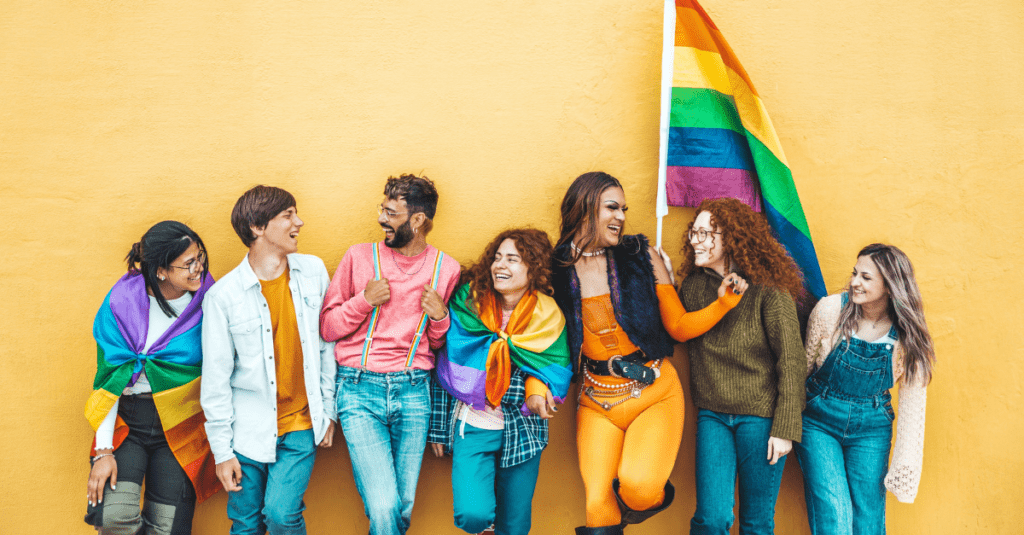
Representation, however, extends beyond simply adding recognizable LGBTQIA+ symbols. While elements such as Pride flags or rainbow identifiers can help signal inclusion, they should be used thoughtfully and authentically. Participants are more likely to connect with imagery that depicts real-life experiences and everyday participation in healthcare and research, rather than relying solely on symbolic representations of identity.
Equally important is ensuring that visuals remain clear and accessible across cultures. Icons, illustrations, and imagery that seem intuitive in one region may not translate effectively into another. Patient-facing materials should prioritize universally understandable visuals, clear information cues, and culturally relevant imagery that support comprehension while helping participants feel represented. When done well, inclusive visual communication strengthens trust, relatability, and engagement – key factors in creating a more participant-centered clinical trial experience.
4. Cultural and linguistic adaptation
As clinical research becomes increasingly global, creating inclusive communications for LGBTQIA+ participants requires more than simply translating content into different languages. Language, cultural norms, healthcare experiences, perceptions of gender and identity, and health literacy levels all influence how participants understand and engage with study information. What feels inclusive and respectful in one region may not translate directly or carry the same meaning in another.
Fanni Hoffmann, Creative Director at Clariness, explains that effective localization focuses not only on accurate translation but also on preserving meaning, tone, and relevance. This may involve adapting terminology, imagery, examples, and communication styles to align with local expectations and healthcare environments. Patient-facing materials should also be designed to accommodate varying levels of health literacy through clear language, intuitive layouts, and accessible explanations of clinical research concepts.
Ultimately, culturally and linguistically adapted communications help ensure that participants can understand, navigate, and trust the information they receive. By designing with local audiences in mind, researchers can create more inclusive experiences that support engagement across diverse patient populations.
5. Accessibility and flexibility
Accessibility means recognizing that participants have different needs, circumstances, and comfort levels. For LGBTQIA+ individuals, barriers such as travel requirements, privacy concerns, financial constraints, or previous healthcare experiences can affect participation.
Many LGBTQIA+ patient advisors favor hybrid trial models that combine in-person visits with remote options, offering both reassurance and convenience. Flexible scheduling, telehealth visits, travel reimbursement, home delivery of study medication, and clear communication can help reduce participation burdens and improve the overall experience.
Accessibility also extends to the study environment itself. Gender-neutral forms, inclusive clinic spaces, all-gender restrooms, and staff trained in LGBTQIA+ cultural competency can help participants feel respected and supported.
Building a more inclusive future for clinical trials
Clinical trials are most effective when they reflect the diversity of the people it is designed to serve. As our understanding of patient experiences continues to evolve, so should our ways of engaging with participants. Inclusion is not a one-time initiative or a box to tick, but an ongoing commitment to listening, learning, and adapting.
The insights shared by LGBTQIA+ communities highlight a broader truth: participants want communication that is relevant, respectful, and transparent. By taking the time to understand different perspectives and reduce unnecessary barriers, researchers can build stronger relationships with participants and create studies that are more representative, meaningful, and impactful.
At Clariness, we partner with sponsors and CROs to develop patient-centric recruitment and engagement strategies that support diverse and representative clinical trials. Through patient insights, culturally adapted communications, inclusive creative development, and global recruitment expertise, we help ensure that study materials resonate with the communities they are designed to reach.
Looking to make your clinical trial communications more inclusive and accessible?