
In this blog, we explore six key strategies for successful mental health clinical trial recruitment, alongside real-world case studies demonstrating how targeted, patient-centric recruitment approaches can improve enrollment outcomes across psychiatry studies.
These insights are built on 20+ years of experience supporting successful recruitment for mental health clinical trials worldwide, including:
- Reducing MDD enrollment costs by 71% across 12 countries
- Achieving a 90% consent-to-randomization rate in schizophrenia recruitment across Poland and Germany
- Delivering 65% of PTSD study enrollment targets in Germany

Why mental health clinical trials matter
Mental health conditions affect more than 1 billion people worldwide, (roughly 1 in 7 people on earth) making mental health research more important than ever. During World Mental Health Awareness Month, the need to improve access to innovative treatments and increase participation in mental health clinical trials is in sharper focus.
Recruiting for psychiatry clinical trials presents unique challenges. From stigma and trust barriers to complex eligibility criteria and patient retention concerns, mental health studies require a highly specialized, patient-centric recruitment strategy.
At Clariness, we have supported more than 15 mental health clinical trials across indications including depression, PTSD, schizophrenia, ADHD, and borderline personality disorder. In this blog, we outline the key strategies that drive successful patient recruitment in mental health clinical research.
1. Become an indication expert
One of the biggest mistakes in mental health recruitment is treating all psychiatric conditions the same. Every indication comes with different patient behaviors, motivations, barriers, and recruitment challenges.
For example, Major Depressive Disorder (MDD) trials often generate large volumes of interest because of the broad patient population. However, converting patients into eligible participants can be more difficult due to strict protocol criteria and varied symptom presentations.
In contrast, schizophrenia clinical trials are typically more expensive and complex to recruit because of:
- Greater disease severity
- Caregiver involvement
- Higher support needs
- Co-morbidities such as substance abuse
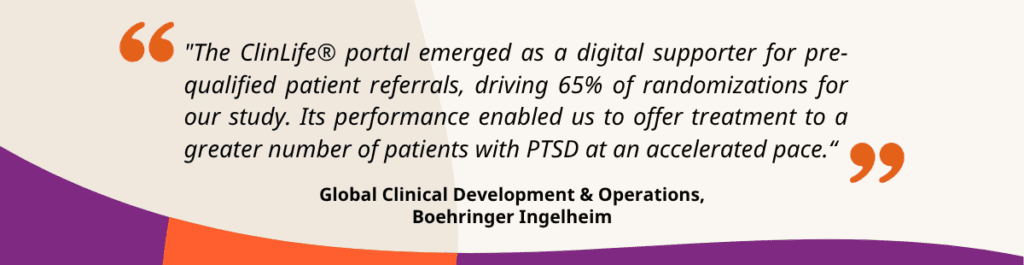
Meanwhile, PTSD studies often benefit from higher online engagement and digital outreach opportunities. In one PTSD study in Germany, Clariness contributed 65% of enrolled patients through digital recruitment and organic patient engagement via ClinLife®.
It is crucial that trial organizers do not treat all mental health clinical trials the same. The differences are clear, and by understanding the nuances of each indication trials will meet randomization targets faster and at a lower cost than applying a blanket approach.
2. Prioritize diversity and inclusion in mental health trials
Mental health conditions disproportionately affect many underrepresented populations, including LGBTQIA+ communities and ethnic minority groups. Unfortunately, these same groups are often underrepresented in clinical research.
Studies show that LGBTQIA+ individuals experience significantly higher rates of depression, anxiety, and other mental health conditions (2.5 times more likely than heterosexual individuals) due to factors such as social stigma, discrimination, isolation, and structural barriers to healthcare.
At the same time, willingness to participate in clinical trials among these communities can be strong when trust, inclusivity, and representation are prioritized. In a recent Clariness survey of more than 6,000 participants across nine countries, 73% of LGBTQIA+ respondents said they would be willing to participate in clinical trials.
Successful diversity strategies in mental health clinical trial recruitment include the use of inclusive language in advertisements and study materials, representation within trial staff, partnerships with advocacy organizations, community-centered outreach, and culturally sensitive communication. These approaches help build trust, improve accessibility, and encourage participation among historically underrepresented populations. Improving diversity in mental health clinical trials not only increases representation and equity, but also strengthens study outcomes, data quality, and the real-world applicability of research findings.
Representation is also particularly important in women’s mental health recruitment. In our experience, in surveys of ADHD, schizophrenia, borderline personality disorder, and MDD, women responded to more online questionnaires overall than men. This trend is also reflected in our clinical trial advertisements for these indications, with women engaging at a rate of 74.92%, compared to just 25% engagement from men. These findings align with broader psychiatry research showing that women tend to demonstrate higher engagement with digital recruitment campaigns and online questionnaires, highlighting the importance of tailored recruitment strategies to ensure balanced participation across genders.

3. Build trust and reduce mental health stigma
More than half of people living with mental health conditions do not receive treatment, often due to stigma, discrimination, and limited access to care. Mental health stigma can take many forms, including public stigma through stereotypes and discrimination, self-stigma through internalized shame, and structural stigma such as the underfunding of mental health research and healthcare services compared to other medical conditions. These barriers can discourage people from seeking treatment, reduce adherence to care, and contribute to distrust in healthcare systems and clinical research.
Mental health clinical trials are also affected by cultural attitudes and social perceptions surrounding mental illness. In international studies, factors such as structural racism, fear of discrimination, family expectations, and social shame can influence diagnosis rates and willingness to participate in research. For example, distrust in medical institutions may reduce participation among African American communities, while stigma surrounding mental illness in some Asian cultures can discourage individuals from seeking professional support. These challenges can significantly limit patient recruitment and diversity in mental health clinical trials.
Building trust is therefore essential to improving participation and retention in mental health research. Patients may feel hesitant to discuss sensitive topics such as suicidal ideation, substance use, or psychiatric symptoms with unfamiliar researchers, making supportive communication and trained staff critical during pre-screening and enrollment.
At Clariness, we address these challenges through a patient-centric recruitment approach that prioritizes empathy, education, and accessibility. We partner with trusted clinicians and patient advocacy groups, gather patient feedback on trial design, provide easy-to-understand educational materials, and offer personalized follow-up through our in-house Enrollment Success Team, who support patients in their local language to help improve engagement and participation in mental health clinical trials.
4. Understand patient motivations and participation barriers
Successful mental health clinical trial recruitment requires a deep understanding of patient motivations, concerns, and participation barriers. A patient-centric approach to trial design and recruitment can significantly improve engagement and retention. Patients with MDD, for example, often prefer studies with fewer and less invasive procedures, shorter assessments, and simplified study requirements. Concerns around privacy, stigma, embarrassment, placebo use, or trial designs perceived as deceptive can also reduce willingness to participate.
Different mental health conditions present unique recruitment challenges. In schizophrenia studies, patients may still be undergoing diagnosis and lack certainty around their condition, requiring more flexible eligibility approaches. In a PTSD clinical trial across four sites in Germany, we found that limited awareness of PTSD symptoms and treatment options was a key barrier to participation, highlighting the need for better patient education on study benefits. Unlike many other therapeutic areas where altruism is a primary motivator, patients participating in MDD clinical trials are often most motivated by the opportunity to improve their own condition and access better treatment options.
5. Go hybrid
Hybrid clinical trials are particularly effective for mental health indications, combining the flexibility of decentralized methods with the trust and support of human engagement. By reducing barriers such as travel, scheduling challenges, financial burden, and frequent in-person visits, hybrid trials can improve recruitment and retention among psychiatry patient populations. Digital tools including telehealth, social media recruitment, online outreach, and remote pre-screening also align with patient preferences for less invasive and less demanding study participation.
The growing shift toward decentralized and hybrid trial models has also been reinforced by FDA guidance on decentralized clinical trials, which supports remote study activities through telehealth, home-based participation, and digital health technologies. However, successful mental health recruitment still depends heavily on timely and personalized patient communication. Patients may be reluctant to answer unfamiliar calls or discuss sensitive symptoms, making rapid, trusted follow-up essential to reducing patient drop-off.
At Clariness, our hybrid recruitment approach combines digital engagement with personalized patient support through our Enrollment Success Team. Supporting more than 12,500 clinical trial sites globally, the team contacts patients within 20 minutes of study registration or at their preferred callback time. In a recent PTSD study for a leading international pharmaceutical company, this approach helped achieve an 86% patient reachability rate, demonstrating the value of responsive, patient-centric follow-up in mental health clinical trials.

6. Use digital recruitment channels strategically
People living with mental health conditions often demonstrate high levels of online engagement and self-education, making digital patient recruitment especially effective for psychiatry clinical trials. Online recruitment campaigns can improve accessibility, reach broader and more diverse patient populations, and deliver strong return on investment. Studies have shown that participants recruited through online advertisements are more likely to consent to participation, while patients with mental health conditions may also be more responsive to online surveys than traditional outreach methods.
At Clariness, we use a multichannel digital recruitment strategy across more than 40 online channels, combining data-driven audience insights, medical expertise, and campaign optimization to improve patient recruitment outcomes. Our ClinLife® patient portal helps drive consistent patient traffic to mental health study landing pages. For one top 20 international pharmaceutical company, we supported schizophrenia, MDD, and PTSD studies that generated more than 500,000 landing page visits and over 3,000 referrals through indication-based recruitment strategies.
Targeted digital advertising is particularly important in mental health clinical trials, where patient language, preferences, and cultural perceptions can strongly influence engagement. We tailor campaigns using geo-targeting, behavioral insights, lookalike audiences, and indication-specific messaging. In schizophrenia studies, for example, advertisements using alternative language such as “psychosis sensitivity” performed better than those using the term “schizophrenia” in several European countries. We also found that illustration-based advertisements often outperformed images of real people. Continuous A/B testing and careful optimization of messaging, audience targeting, and advertisement reach are essential to improving recruitment performance while avoiding site overload.
Three winning mental health case studies
With over 20 years of mental health / psychiatry patient recruitment experience, Clariness has supported numerous indications, helping top pharma reach their enrollment goals. Here are three case studies:
Case study: 71% lower enrollment costs in MDD recruitment across 12 countries
For a phase III Major Depressive Disorder (MDD) study, Clariness supported online patient recruitment across 184 sites in 12 countries through a 12-month global recruitment campaign.
Our approach:
- Positioned campaigns across channels aligned to patient and caregiver demographics
- Placed advertisements within a strategic radius around study sites to improve referral quality
- Expanded site engagement and screening capacity through recruitment support
Our results:
- Over 2.3 million website visits generated through digital outreach
- 71% lower cost per enrolled patient compared to previous recruitment vendor
- 7 months saved in enrollment timelines through Clariness support

Case study: 90% consent-to-randomization rate in schizophrenia recruitment across Poland and Germany
Clariness supported a major pharmaceutical company with recruitment for three schizophrenia studies across Poland and Germany, helping accelerate enrollment for a pivotal study requiring urgent recruitment support.
Our approach:
- Combined 2 of 3 studies with identical protocols into a single ClinLife® landing page
- Launched additional Meta advertising campaigns boosted patient traffic by 75% and resulted in 6x increased referrals
- Optimized online screening workflows, resulting in 86% of patients successfully completing the online screener and reducing screen failure rates to just 10%
Our results:
- Study went live in just 2 weeks
- 90% consent to randomization conversion rate
- 19 randomized patients enrolled
Case study: 65% of PTSD study enrollment target delivered in Germany
Clariness supported with patient recruitment for a Post-Traumatic Stress Disorder (PTSD) study across four sites in Germany through the ClinLife® patient portal.
Our approach:
- Used ClinLife® as the sole digital recruitment platform for the study in Germany
- Accelerated patient engagement through indication-focused digital outreach and patient education
Our results:
- 3,000 organic study page visits
- 300 referrals & 43 screened patients
- 65% of total study target delivered
Take a look at what our client from Boehringer Ingelheim said:
Successfully recruiting for mental health clinical trials requires more than a traditional recruitment strategy. From reducing stigma and improving patient trust to leveraging digital outreach and hybrid trial models, patient-centric recruitment approaches are essential to accelerating enrollment and improving study outcomes in psychiatry research.
At Clariness, we combine indication expertise, global digital recruitment capabilities, and patient-focused engagement strategies to support sponsors across a wide range of mental health clinical trials.